
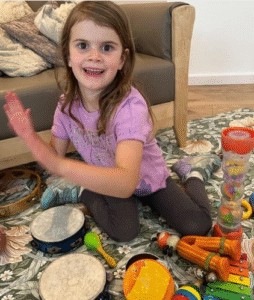
At nursery, when the tambourines are jingling and the drums are booming, it might look like children are “just having fun.” But in reality, they’re building a whole toolkit of skills that go far beyond music – including early phonics.
1️⃣ Linking music to early phonics
-
Sound discrimination – Playing and listening to different instruments trains the ear to notice changes in pitch, tone, and volume, helping children hear the subtle differences between letter sounds.
-
Rhythm and syllables – Clapping or drumming to a beat helps children recognise syllable patterns in words, a key phonics skill.
-
Listening and memory – Following a teacher’s rhythm pattern builds auditory memory, which is essential for remembering phonics rules and sight words.
2️⃣ Developing physical skills
-
Fine motor skills – Striking a triangle, plucking strings, or pressing xylophone keys strengthens the small hand muscles needed for pencil control.
-
Gross motor skills – Marching to a beat, shaking maracas, or drumming with both hands develops coordination and body awareness.
3️⃣ Boosting brain power
-
Pattern recognition – Music is full of repeating sequences, just like language and maths. Spotting and predicting these patterns supports problem-solving skills.
-
Memory skills – Remembering how to play a short tune or repeat a sequence strengthens working memory.
4️⃣ Building social and emotional skills
-
Turn-taking and cooperation – Group music-making teaches patience, sharing, and teamwork.
-
Confidence – Performing a sound pattern or song gives children a sense of pride and achievement.
-
Self-expression – Music gives children a safe space to express feelings through sound.
5️⃣ Encouraging creativity and imagination
When children use instruments to make rain sounds for a story, or create a “happy” tune, they’re linking music to storytelling, emotional literacy, and creative thinking.
💡 Try it at home
-
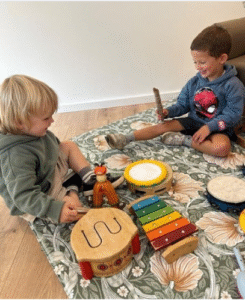
Make a “sound box” with simple homemade instruments (rice in bottles, rubber bands over a box).
-
Play “loud/quiet” games and talk about the differences.
-
Match sounds to pictures or words (e.g., slow drum = elephant walk, quick drum = mouse run).
By giving children opportunities to explore instruments, we’re helping them tune into the sounds around them – a skill that not only builds a love for music, but also supports their early literacy, physical development, and confidence.