
When you think of “maths,” you might picture numbers on a page, sums to solve, or shapes to name. But in preschool, maths is so much more than that – and it all starts with play.
For young children, early maths is about building a foundation for thinking, reasoning, and problem-solving. It’s not about sitting at a desk and reciting numbers; it’s about exploring the world, asking questions, and making discoveries – all while having fun.
Where Maths Begins
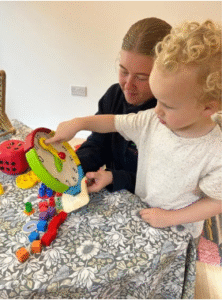
Long before children can write numbers, they are developing mathematical thinking. Sorting blocks by colour, stacking cups from biggest to smallest, pouring water from one jug to another – these simple activities are the building blocks of early maths. In preschool, we create opportunities for children to explore:
-
Number – counting toys, noticing quantities, or singing counting songs.
-
Shape and Space – building towers, completing puzzles, or creating pictures with shapes.
-
Measure – comparing lengths of ribbons, weighing pretend ingredients, or timing a race.
-
Patterns – spotting stripes on a shirt, making bead necklaces, or clapping to a rhythm.
Learning Through Play
Children learn best when they’re engaged and interested. That’s why we weave maths into the things they love to do:
-
In the sandpit, they might fill and empty buckets, comparing which is “full” and which is “half-full.”
-
During role play, they could “buy” food from a pretend shop, counting coins and deciding how much they can “spend.”
-
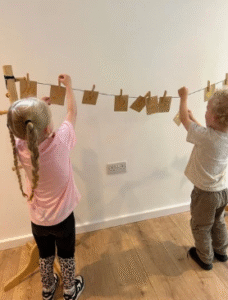
Outdoors, they might search for “big” and “small” leaves, line them up from shortest to longest, or count how many they’ve found.
Why Play Works
Play gives children the freedom to experiment, make mistakes, and try again without pressure. It allows them to develop confidence and see maths as a natural, useful part of their everyday lives – not something separate or intimidating.
Building a Positive Relationship with Maths
Our goal in preschool isn’t just to teach maths skills; it’s to spark curiosity. We want children to leave us thinking, “Maths is fun!” because they’ve seen it in action – in games, in stories, in baking, in building, and in exploring the world around them.

Easy Maths Games to Try at Home
Here are some simple, no-prep activities you can do together that sneak maths into everyday life:
-
Treasure Hunt Counting
Hide small objects (toys, blocks, spoons!) around the room. As your child finds them, count together – forwards and backwards. -
Shape Hunt
Choose a shape and see how many you can spot around the house or on a walk (circles in wheels, rectangles in doors). -
Kitchen Measuring
Involve your child in cooking – let them measure cups of flour, pour water to a marked line, or compare the size of spoons. -
Sock Sorting
Empty the laundry basket and sort socks by colour, size, or pattern. Count how many pairs you’ve made. -
Build a Tower
Use blocks, boxes, or even plastic cups. Count how many pieces it takes to build the tallest tower – and see if you can beat your record. -
Pattern Making
Make a pattern with everyday objects (apple, banana, apple, banana) and ask your child to continue it.
By keeping maths playful, you’re helping your child develop essential skills without them even realising they’re “learning.” And best of all, you’re sharing time, laughter, and a love for discovery.